
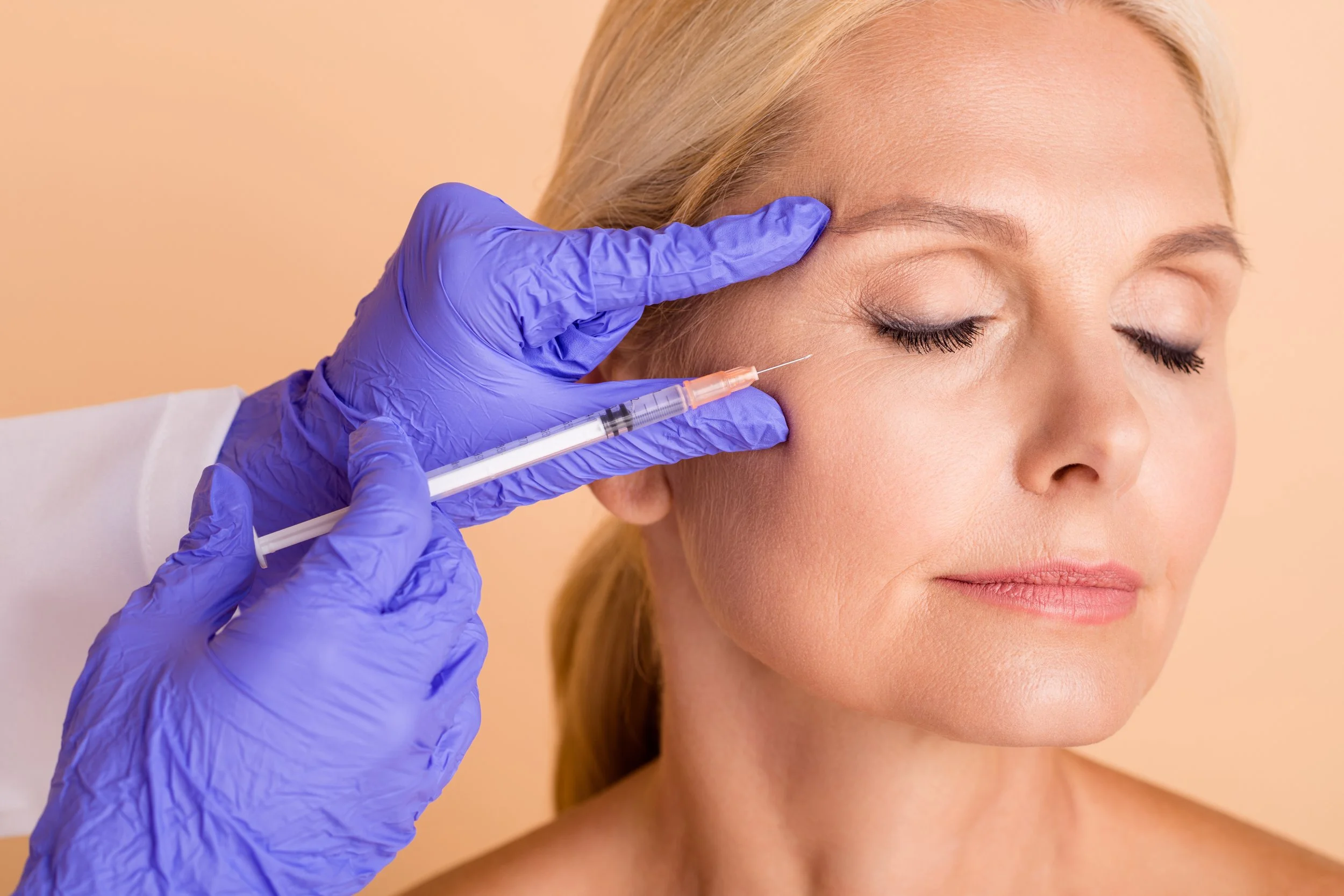
What is Sculptra®?
Sculptra® is the brand name for injectable poly-L-lactic acid (PLLA), a synthetic, biocompatible, and biodegradable polymer that has been used safely in medical applications for over 40 years. Unlike traditional dermal fillers that simply fill space, Sculptra works as a biostimulator—a unique type of injectable that stimulates your body's own collagen production to gradually restore facial volume and improve skin quality over time.
PLLA is the same material used in dissolvable sutures and other medical implants. When used for aesthetic purposes, it is supplied as a sterile, lyophilized (freeze-dried) powder that is reconstituted with sterile water before injection. The microparticles are carefully controlled in size and chemical properties to ensure consistent, predictable results.
-
Sculptra® works through a sophisticated biological process that differs fundamentally from traditional fillers. Rather than simply occupying space, PLLA acts as a scaffold that triggers your body's natural regenerative processes.
The Biostimulatory Cascade:
When Sculptra® microparticles are injected into the deep dermis or subcutaneous tissue, they initiate a controlled, subclinical inflammatory response. This response activates specialized immune cells called M2 macrophages, which release growth factors including transforming growth factor-beta 1 (TGF-β1). These growth factors stimulate fibroblasts—the cells responsible for producing collagen—to increase production of new collagen fibers.
Collagen Production and Tissue Remodeling:
Over the following weeks and months, your body gradually builds new collagen around the PLLA microparticles, creating a natural scaffold that restores volume and improves skin structure. This process, called neocollagenesis, leads to increased dermal thickness, improved extracellular matrix remodeling, enhanced skin density, and better overall skin quality and texture.
Gradual, Natural-Looking Results:
Unlike hyaluronic acid fillers that provide immediate volume, Sculptra®'s effects develop gradually over several weeks to months as collagen production increases. Meanwhile, the PLLA microparticles are slowly broken down through hydrolysis into lactic acid, which is then metabolized into carbon dioxide and water and naturally eliminated from the body through normal metabolic processes.
The result is a natural-looking improvement that can last two years or more, as the newly formed collagen provides structural support even after the PLLA has been completely absorbed.
-
Pre-Treatment Consultation:
During your consultation, discuss the following with your provider:
Your aesthetic goals and expectations (Sculptra™ provides gradual, subtle improvements rather than immediate dramatic changes)
Medical history, including any autoimmune conditions, bleeding disorders, or tendency to form keloid scars
Current medications and supplements
Previous filler treatments and any complications
Allergies to any components or lidocaine
History of herpes simplex or cold sores (prophylactic antiviral medication may be recommended)
Recent or upcoming dental procedures
Pre-Treatment Instructions:
To minimize bruising and optimize results, your provider may recommend:
One week before treatment:
Avoid blood-thinning medications and supplements including aspirin, ibuprofen, naproxen, vitamin E, fish oil, ginkgo biloba, and St. John's wort (only if medically safe to discontinue—always consult your prescribing physician first)
Limit alcohol consumption
Consider starting arnica supplements if approved by your provider
24-48 hours before treatment:
Avoid excessive sun exposure
Stay well-hydrated
Day of treatment:
Arrive with clean skin, free of makeup in the treatment area
Eat a light meal beforehand
Plan for multiple treatment sessions (typically 2-3 sessions spaced 4-6 weeks apart for optimal results)
Contraindications:
Sculptra® should not be used if you have:
Active skin infection or inflammation at the injection site
Known hypersensitivity to PLLA or any component
History of keloid formation or hypertrophic scarring
Bleeding disorders (relative contraindication)
Pregnancy or breastfeeding (safety not established)
-
Immediate Post-Treatment Care:
Sculptra® requires specific post-treatment care to ensure optimal results and minimize complications:
Massage Protocol:
Traditionally, patients have been instructed to follow the "5-5-5 rule"—massage the treated area 5 times per day for 5 minutes for 5 days after each treatment session. While recent research suggests that with proper injection technique and dilution, massage may not significantly impact nodule formation, many practitioners still recommend it as a precautionary measure. Your provider will give you specific instructions based on their protocol.
First 24-48 Hours:
Apply ice or cold compresses intermittently to minimize swelling
Keep your head elevated, including while sleeping
Avoid touching or pressing the treated area excessively (except for prescribed massage)
Avoid strenuous exercise or activities that increase blood flow to the face
Do not lie flat for at least 4 hours after treatment
Avoid alcohol consumption
First Week After Treatment:
Continue massage as instructed by your provider
Avoid excessive heat exposure including saunas, hot tubs, steam rooms, and intense sun exposure
Postpone dental procedures, facial treatments, or laser procedures
Use gentle skincare products
Apply sunscreen daily (SPF 30 or higher)
Avoid sleeping on your face
What to Expect:
Mild swelling, redness, and tenderness at injection sites are normal and typically resolve within 2-7 days
Bruising may occur and can last 7-14 days
You may feel small bumps under the skin immediately after treatment—this is the product and should not be visible
Results are NOT immediate—visible improvement typically begins 4-6 weeks after treatment and continues to develop over 3-6 months
Multiple treatment sessions (usually 2-3) spaced 4-6 weeks apart are typically required for optimal results
Final results can last 2 years or longer
-
FDA-Approved Uses:
Sculptra® has been approved by the FDA for:
Medical Indications:
Restoration and correction of facial fat loss (lipoatrophy) in people with human immunodeficiency virus (HIV) - approved 2004
Cosmetic Indications:
Correction of shallow to deep nasolabial fold contour deficiencies and other facial wrinkles
Treatment of wrinkles in the cheek area
Unique Advantages:
Unlike temporary fillers, Sculptra® offers several distinctive benefits:
Long-lasting results (up to 2+ years)
Gradual, natural-looking improvement
Stimulates your own collagen production
Improves overall skin quality and texture
Provides global facial rejuvenation rather than just filling individual lines
Can treat large areas with volume loss
Results continue to improve over time
Off-Label Uses:
With growing clinical evidence, Sculptra® is also used for:
Facial Rejuvenation:
Temple augmentation and volume restoration
Midface volume enhancement
Jawline contouring and definition
Chin augmentation
Improvement of marionette lines
Tear trough correction (with caution)
Overall facial contouring and lifting
Body Rejuvenation:
Dorsal hand rejuvenation (back of hands)
Neck and décolleté rejuvenation
Buttock augmentation and contouring ("Sculptra® butt lift")
Improvement of cellulite appearance
Knee rejuvenation
Inner thigh and arm skin laxity
Abdominal skin quality improvement
Skin Quality Enhancement:
Improvement of skin texture and firmness
Reduction of fine lines and wrinkles
Enhancement of skin elasticity
Treatment of acne scars and other depressed scars
Medical and Reconstructive Uses:
Correction of facial asymmetry
Volume restoration in patients with facial lipoatrophy from various causes
Post-weight loss facial and body contouring
Restoration after GLP-1 medication-related volume loss
Emerging Applications:
"Prejuvenation" (preventive treatment in younger patients)
Combination with energy-based devices for enhanced results
Skin boosting for overall dermal regeneration
-
Common Side Effects:
Most side effects are mild, temporary, and resolve without intervention:
Injection site reactions: pain, tenderness, redness (very common)
Swelling and bruising (very common, may be more pronounced than with other fillers)
Small bumps under the skin at injection sites (usually not visible)
Itching
Discoloration
Temporary firmness at injection sites
Less Common Complications:
Papules and Nodules:
The most characteristic complication associated with Sculptra™ is the formation of papules (small bumps) or nodules (larger lumps) under the skin. These typically:
Occur in 2-19% of patients (rates have decreased significantly with improved techniques)
Appear several weeks to months after injection
Are usually palpable but not visible
Are generally asymptomatic
Often resolve spontaneously over time
Can be camouflaged with hyaluronic acid filler if visible
Result from suboptimal product reconstitution, placement too superficial in the skin, or inadequate dilution
Other Complications:
Visible lumps or bumps
Asymmetry
Prolonged swelling
Infection at injection sites
Skin discoloration (hyperpigmentation or hypopigmentation)
Serious but Rare Complications:
Granulomas:
True inflammatory granulomas are very rare (incidence 0.01%-0.1%) but represent a more serious complication:
May appear months or even years after injection
Represent an excessive immune response to PLLA
Can persist and grow over time
May require treatment with intralesional corticosteroids, oral corticosteroids, or antimetabolites such as 5-fluorouracil
Can be recurrent and challenging to treat
Delayed Immune Reactions:
Rare cases of delayed-onset immune-mediated reactions have been reported, including:
Facial edema (swelling)
Skin induration (hardening)
Tender, inflammatory nodules
Systemic granulomatous reactions (extremely rare)
These reactions may occur 6 months to several years after injection and can be recurrent.
Vascular Complications:
While extremely rare with Sculptra, serious vascular complications can theoretically occur with any injectable:
Vascular occlusion (blockage of blood vessels)
Skin necrosis (tissue death)
Vision changes or blindness (extremely rare)
Important Safety Information:
The risk of complications can be minimized through:
Treatment by qualified, experienced healthcare providers with thorough knowledge of facial anatomy
Proper product reconstitution (adequate dilution, typically 8-10 mL or more)
Appropriate injection technique (deep placement in subcutaneous tissue, not dermis)
Avoiding overcorrection
Adequate time between treatment sessions (at least 4-6 weeks)
Patient compliance with post-treatment massage instructions
Conservative approach with gradual volume building
When to Seek Medical Attention:
Contact your healthcare provider if you experience:
Severe pain during or after injection
Blanching (whitening) of the skin
Skin discoloration that appears purple, dusky, or mottled
Sudden vision changes
Visible or enlarging lumps or bumps
Signs of infection (increasing redness, warmth, pus, fever)
Persistent or worsening swelling
Any concerning symptoms weeks or months after treatment
-
Immediate (Day 0-7):
Visible swelling at injection sites
Possible bruising
Mild discomfort and tenderness
Small bumps may be palpable under the skin
No visible volumizing effect yet (any immediate volume is from the water used to reconstitute the product and will resolve within days)
Early Phase (Weeks 2-6):
Swelling and bruising resolve
Initial water volume dissipates
Collagen production begins but is not yet visible
Treated area may appear as it did before treatment
This is normal—be patient!
Collagen Building Phase (Weeks 6-12):
Gradual improvement becomes noticeable
Collagen production accelerates
Volume begins to develop
Skin quality starts to improve
Optimal Results (Months 3-6):
Full effects become apparent
Maximum collagen production achieved
Natural-looking volume restoration
Improved skin texture, firmness, and quality
Enhanced facial contours
Maintenance Phase:
Results typically last 2 years or longer
Some patients report benefits lasting 3+ years
Gradual, natural fading as collagen is slowly remodeled
Touch-up treatments can maintain results
Maintenance treatments typically require fewer vials than initial treatment series
Treatment Series:
Most patients require 2-3 treatment sessions spaced 4-6 weeks apart for optimal results. The number of vials per session depends on the area treated and degree of volume loss, but typically ranges from 1-4 vials per session.
-
Sculptra® vs. Hyaluronic Acid Fillers:
Sculptra® stimulates collagen; HA fillers provide immediate volume
Sculptra® results are gradual; HA results are immediate
Sculptra® lasts 2+ years; most HA fillers last 6-18 months
Sculptra® cannot be dissolved; HA can be reversed with hyaluronidase
Sculptra® treats larger areas; HA is better for precise contouring
Sculptra® improves skin quality; HA primarily adds volume
Sculptra® vs. Calcium Hydroxylapatite:
Both are biostimulators
Sculptra® typically lasts longer
Different injection techniques and dilutions
Different complication profiles
-
Sculptra® represents a unique approach to facial and body rejuvenation, working with your body's natural processes to gradually restore volume and improve skin quality through collagen stimulation. Its long-lasting results, natural appearance, and ability to treat large areas make it an excellent option for patients seeking comprehensive rejuvenation rather than quick fixes.
The gradual nature of Sculptra®'s effects requires patience and realistic expectations. Results develop over months, not days, but the wait is rewarded with natural-looking improvements that can last two years or longer. When administered by qualified healthcare professionals using proper technique, Sculptra™ provides safe, effective, and durable aesthetic enhancement.
Understanding the unique characteristics of Sculptra®, including the need for multiple treatment sessions, post-treatment massage, and gradual results, helps ensure optimal outcomes and patient satisfaction. Always discuss your individual health history, goals, and concerns with your provider to determine if Sculptra® treatment is right for you.
Ready to get started?
Aesthetic Surgery Journal. 2025. Haykal D, Haddad A, Cartier H, Avelar L.New
2.Composition and Mechanism of Action of Poly-L-Lactic Acid in Soft Tissue Augmentation.
Journal of Drugs in Dermatology : JDD. 2014. Vleggaar D, Fitzgerald R, Lorenc ZP.
Journal of Drugs in Dermatology : JDD. 2024. Huth S, Huth L, Marquardt Y, et al.
4.Injectable Poly-L-Lactic Acid for Cosmetic Enhancement: Learning From the European Experience.
Journal of the American Academy of Dermatology. 2009. Butterwick K, Lowe NJ.
Dermatologic Surgery : Official Publication for American Society for Dermatologic Surgery. 2023. Alcotzer I, Liassidou A, Hexsel D, Tsur Shenhav L, Artzi O.
6.Physiochemical Characteristics of Poly-L-Lactic Acid (PLLA).
Aesthetic Surgery Journal. 2018. Fitzgerald R, Bass LM, Goldberg DJ, Graivier MH, Lorenc ZP.
Journal of Drugs in Dermatology : JDD. 2014. Vleggaar D, Fitzgerald R, Lorenc ZP, et al.